
The Histories of St. Mary's (Spirit Lake) and St. Joseph's (Milford)

⛪ St. Mary's (Spirit Lake)
1005 Hill Ave
Spirit Lake, IA 51360
(712) 336-1742
The History of St. Mary's
The history of St. Mary’s Parish in Spirit Lake is closely intertwined with the earliest pioneer days of northwest Iowa. In 1856, the first settlers arrived in Dickinson County. During the turbulent summer of 1857, a pioneer fort was constructed on the very ground where St. Mary’s Church stands today, commemorated by the historical marker at Hill Avenue and 11th Street.
In 1873, traveling missionary Rev. J.J. Smith of Emmetsburg offered the first Holy Mass in Dickinson County right here in Spirit Lake. Father Smith faithfully traveled to the lakes area two to three times a year to minister to the scattered Catholic families until his death in 1882. He was succeeded by Father M.K. Norton, and later in 1887 by Father Luke Carroll, who made his home in Ruthven while serving Spirit Lake, Milford, Spencer, and Lake Park as missions.
Through over 150 years of growth, St. Mary’s expanded alongside the Iowa Great Lakes community, evolving into the spiritual mother church of the lakes area. Today, St. Mary's proudly continues its mission of faith, hospitality, and service, warmly welcoming year-round parishioners and thousands of seasonal lake visitors each year.
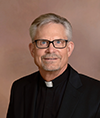
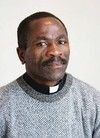
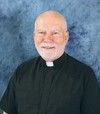
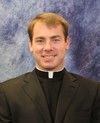
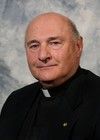
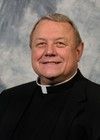
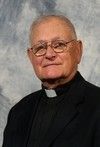
Recent History of Pastors at St. Mary's
(Note that some pastors did not provide pictures)
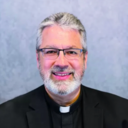
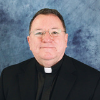
Historical Pastors & Missionaries

⛪ St. Joseph's (Milford)
1305 Okoboji Ave
Milford, IA 51351
(712) 338-2274
The History of St. Joseph's
The history of St. Joseph’s Parish in Milford begins with the story of early settlers in northwest Iowa. In 1856 the first settlers made their homes in Dickinson county. A traveling missionary, the Rev. J.J. Smith of Emmetsburg read the first Holy Mass in the county in 1873 at Spirit Lake. Rev. Smith continued his visits two or three times a year until his death in 1882 when Father M.K. Norton came to Spirit Lake to attend to the spiritual needs of the few scattered Catholic families.
Meanwhile, the town of Milford was growing, mainly because of the saw mills and the flour mill at the outlet of the Iowa Great Lakes. In about 1883 the first Catholics arrived in the territory that now makes up St. Joseph’s Parish. During the summer of 1884 Father Norton celebrated the first Holy Mass in Milford territory, in the home of Daniel Ryan, five miles southeast of town. Father Norton continued to offer Mass in private homes and above the J.P. Ellis store for at least ten Catholic families here. In 1887 Father Luke Carroll came to the lakes area, making his home at Ruthven, but serving Everly, Spencer, Lake Park, Spirit Lake and Milford as missions.
Immigration of Catholic families continued so that by 1890 the establishment of a real parish was considered. In the winter of 1890–91 the first church was constructed at a cost of $1,300. Father Carroll stayed until 1895 when Father P. McCauley was assigned to Milford, with Spirit Lake, Lake Park and Spencer as his missions. He was transferred within a short time, leaving Milford and surrounding towns without a priest. Later Father P.A.R. Tierney was assigned to this territory and it was during this time that the parish debt was cleared and the church was dedicated. The parish was originally known as St. Patrick’s, although the Irish and Germans were equally represented on parish rosters.
During the early part of 1897 Father Tierney was followed by the Rev. L.J. Kirby. With the cooperation of the church committee, he purchased four acres of land in 1898 from John Guthrie to be used for burials. This ground became the church’s Calvary Cemetery.
With the arrival of Father Kirby, who lived in Spencer, St. Patrick’s Parish began receiving the regular services of a priest every second Sunday. After five years Father Kirby was followed by Father M.J. Quirk. Father Quirk was replaced the following year by the Rev. M.J. Heatherington, who served Milford every second Sunday until 1908, when he was succeeded by the Rev. B.A. Hunt. For 29 years, after the building of the Church, St. Patrick’s Parish continued without a resident pastor.
Finally, on May 28, 1909, Bishop Garrigan of the Sioux City diocese appointed the Rev. E.C. Meyers to the parish in Milford, with missions at Spirit Lake and Okoboji.
Father Meyers’ key role in the development of the parish cannot be underestimated. Upon his arrival he purchased a two-block cornfield north of town adjacent to Main Street for parish expansion. More Catholic families moved into the area. Father Meyers had the old church and public school moved onto the new property. A new sanctuary and sacristy were added to the rear of the church, dedicated in 1912. With the Bishop’s permission, the church’s name was changed from St. Patrick’s to St. Joseph’s, fulfilling a vow Father Meyers had made in 1910 while on pilgrimage to the Holy Land.
St. Joseph’s School opened on September 8, 1913 with 50 pupils, taught by the Franciscan Sisters of Perpetual Adoration. In September 1919, the parish voted to construct a new brick church seating 800 to accommodate summer lake visitors. On August 29, 1920 the cornerstone was laid, completed at a cost of $100,000.
To lift the church debt during post-WWI hardship, Father Meyers famously organized the "Mortgage Lifting Pig Club," raising thousands of pigs donated by farmers across the diocese. By 1947, under the leadership of Father Otto Dentlinger and Father James Greteman, the mortgage was completely burned.
Later decades brought continued modernization, including construction of the convent in 1961 and a new grade school in 1966 under Father Joseph Fitzpatrick. Father James Fandel served as pastor from 1974 to 1986, overseeing major renovations and the Shrine to the Blessed Virgin. He was succeeded by Msgr. A.J. (Joe) Elbert (1986–1987) and Father Roger Augustine (1987–1988).
Recent History of Pastors at St. Joseph's
(Note that some pastors did not provide pictures)